Cuter Version of Dad: A Designer’s Craft Fair Review
As an embroidery designer who has spent countless hours behind the hoop and even more time standing behind a craft fair table, I have learned that not all designs are created equal. Some look stunning on a screen but vanish in person, while others become instant bestsellers because they connect emotionally with the buyer. Today, I am putting Cuter Version of Dad under the microscope. This is not just a technical review; it is a real-world assessment of how this machine embroidery design performs when you are trying to move inventory at a weekend market or boost your online shop’s conversion rate.
The premise of the Cuter Version of Dad is simple yet powerful. It taps into the universal language of family humor and affection. In the world of handmade products, especially within the Birthdays category, items that evoke a smile or a chuckle often outsell purely decorative pieces. The description promises a design that is fun, easy to stitch, and elegant when finished. But does it hold up when stitched onto a textured tea towel or stretched over a curved cap? Let’s dive into the details.
First Impressions and Visual Appeal
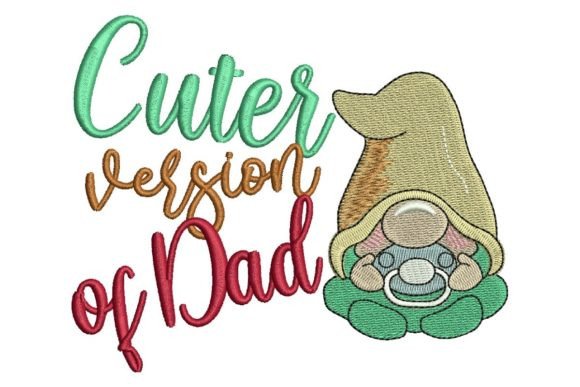
When I first loaded the embroidery file into my software, the immediate impression was one of approachable charm. The design does not scream for attention with aggressive boldness; instead, it offers a soft, inviting aesthetic that fits seamlessly into modern farmhouse, rustic, or minimalist booth displays. For a craft fair seller, this versatility is gold. You do not want a design that clashes with your brand identity. Whether your table is draped in linen and lace or burlap and wood, the Cuter Version of Dad adapts.
The elegance mentioned in the product description likely stems from clean lines and balanced spacing. In embroidery, clutter is the enemy of perceived value. A design that looks "expensive" usually has breathing room between stitch elements. If this design maintains that open, airy feel, it will photograph beautifully for your Etsy listings. High-contrast thread colors against neutral fabrics will make the design pop in printable mockups and real-life photos alike, drawing the eye of potential buyers scrolling through digital marketplaces.
Product Applications for Maximum Sales
The true test of any commercial embroidery design is its versatility across different substrates. Here is how I see the Cuter Version of Dad performing on various small shop products:
- Tote Bag Design: This is perhaps the strongest contender. A canvas tote with this design stitched centrally makes for an excellent gift item. It is practical, visible, and serves as a walking advertisement for your brand. Ensure you use a heavy cut-away stabilizer to prevent puckering on the thin canvas.
- Apron Embroidery: Father’s Day and birthdays are peak seasons for aprons. Stitching this on the bib of a sturdy cotton apron creates a high-value item. The design’s "fun" nature pairs perfectly with the utility of a kitchen apron, making it a top-tier craft fair product.
- Tea Towel Embroidery: Kitchen textiles are impulse buy staples. However, tea towels present a challenge due to their loose weave. If the stitch density is too low, the fabric may show through excessively. If it is too high, the towel may pucker. Test this carefully on scrap fabric before committing to a production run.
- Embroidered Patch: Creating iron-on or velcro-backed patches allows customers to customize their own gear. This extends the life of the design beyond your immediate inventory. Patches are also easier to ship, reducing overhead for online sellers.
- Caps and Headwear: Curved surfaces are tricky. If the design is wide, it may distort on a standard dad hat. Check the width against your hoop size and the cap’s front panel. If it fits, it becomes a premium item with a higher profit margin.
Production Practicality and Batch Efficiency
For those of us running a business, time is money. The description states that the Cuter Version of Dad is "easy to stitch." In designer terms, this usually implies manageable stitch counts and minimal thread breaks. A design that runs quickly and reliably is essential for batch production. If you are preparing for a large craft fair, you need designs that can be hooped, stitched, and trimmed efficiently.
Consider the repeatability of the design. Does it require frequent color changes? Each stop adds time and potential for error. If this design uses a limited palette of thread colors, it streamlines your workflow. Furthermore, easy-to-stitch designs reduce wear and tear on your machine. For digital sellers, offering a design that is known for being trouble-free builds trust with other embroidery business owners who purchase your assets.
Technical Considerations and Careful Use
While the design may be user-friendly, several technical factors require your attention before you launch your finished product line:
- Stitch Density and Fabric Texture: Always test on the actual fabric you intend to sell. Dense stitch areas on thick fabrics like denim or canvas may cause needle deflection or breakage. On textured towels, ensure the stitches are dense enough to cover the weave but not so tight that they create a hard, cardboard-like feel.
- Small Details and Lettering: If the design includes text or fine lines, verify their clarity at smaller sizes. Tiny lettering can merge together if the fabric shifts slightly during stitching. Avoid using this design on items where it must be scaled down significantly, such as small pouches, unless you confirm legibility.
- Dark Fabric Contrast: The design’s visibility depends heavily on thread choice. On dark fabrics, you must use light or metallic threads to maintain the "cute" and "elegant" appeal. Poor contrast will make the design disappear, lowering the perceived quality of the handmade product.
- Stabilizer Selection: Do not skimp on stabilizer. For stretchy fabrics like t-shirts or caps, a strong cut-away is non-negotiable. For woven fabrics like aprons, a tear-away might suffice, but always prioritize preventing distortion.
Boosting Brand Consistency and Buyer Engagement
Incorporating the Cuter Version of Dad into your lineup does more than add a new SKU; it strengthens your brand narrative. It shows that you understand your audience’s desire for personalized, meaningful gifts. When customers see a cohesive collection of items featuring this design—perhaps a matching set of an apron and a tote bag—they are more likely to engage and purchase multiple items.
For Etsy sellers and boutique makers, this design offers excellent opportunities for cross-promotion. Use it in bundle deals or as a free gift with purchase for orders over a certain amount. Its appeal spans generations, making it a safe bet for a wide demographic. By presenting it as a premium, well-executed piece of embroidery, you elevate the perceived value of your entire booth or shop.
Final Designer Notes
Before you commit to full-scale production, take these final steps. First, stitch out a sample on every type of fabric you plan to use. Second, check the specific file formats included in the digital embroidery file package to ensure compatibility with your machine. Third, confirm the commercial licensing terms. While many designs allow for physical product sales, some restrict the number of units or prohibit digital resale. Knowing these boundaries protects your business.
The Cuter Version of Dad has the potential to be a staple in your inventory. It balances humor with elegance, making it suitable for birthdays, Father’s Day, or just-because gifts. By paying attention to stitch density, thread contrast, and fabric choice, you can transform this simple embroidery file into a high-performing craft fair product that delights customers and drives sales. Remember, the success of a handmade product lies not just in the design itself, but in the care and expertise you apply when bringing it to life.